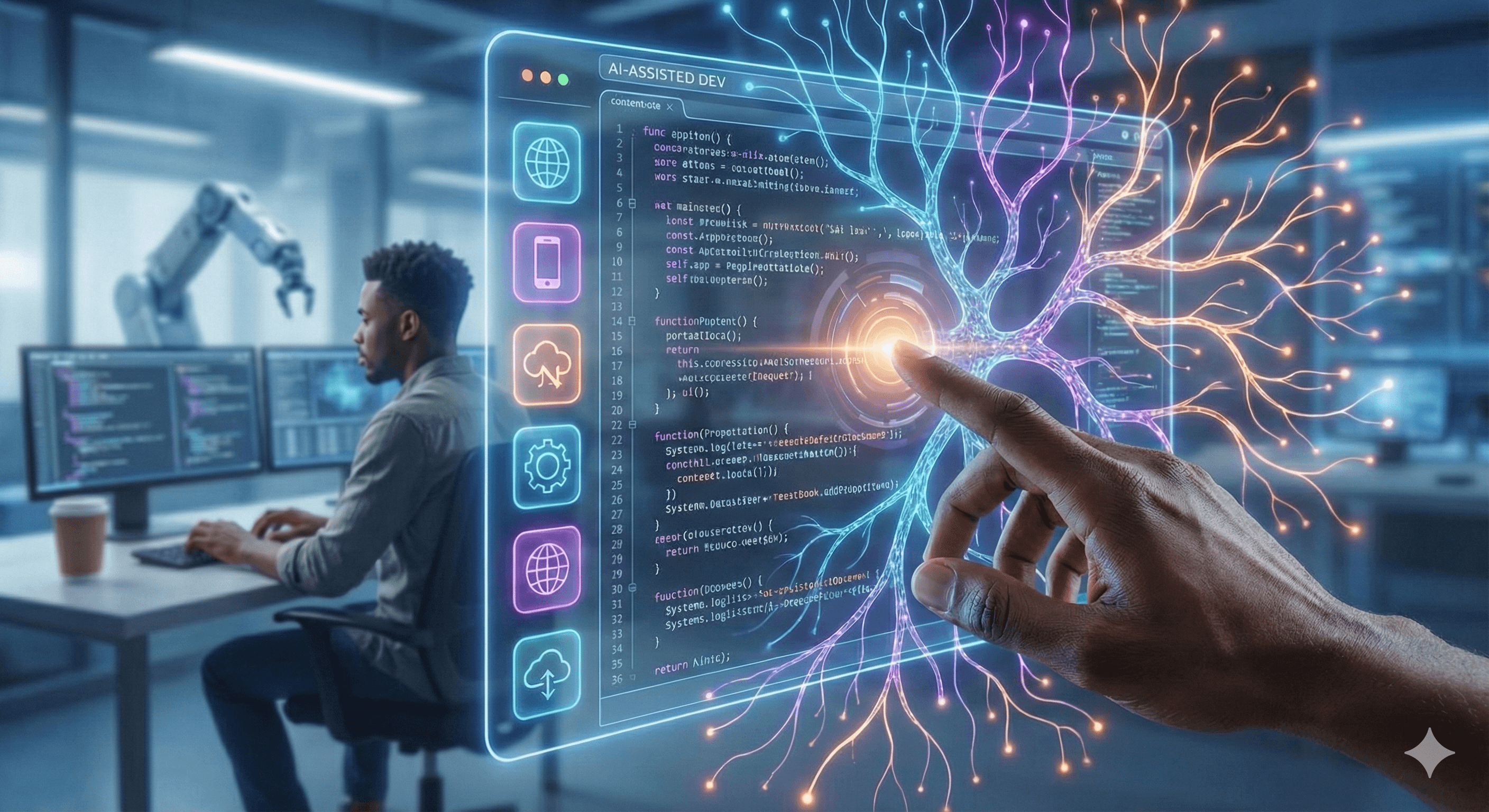
How AI is Rewriting the Software Development Life Cycle
Artificial intelligence is no longer just "revolutionizing" the way we develop applications—it has fundamentally rebuilt the foundation. We have moved past simple auto-complete; we are now in the era of **AI Agents** and **Context-Aware Architects**. From automated code generation to intelligent, self-healing testing, AI has become the silent partner in every high-performing engineering team.
The Rise of AI in Development: From Assistant to Partner
Modern AI tools do not just write code; they understand intent. They are helping developers architect systems, identify bugs before they compile, and optimize performance automatically.
This shift is enabling teams to focus on solving complex business problems rather than getting bogged down in syntax and boilerplate. The question is no longer "Can AI write this function?" but "Which AI agent should handle this part of the stack?"
The Power Players: Tools Redefining the SDLC
To truly leverage this shift, you need the right toolset. Here are the standout performers transforming development right now:
1. The Context Kings (Coding & Architecture)
Cursor: widely considered the gold standard for "AI-native" code editing. Unlike plugins that just see your current file, Cursor indexes your entire codebase. You can ask, "Where is the auth logic for user payments?" and it will scan multiple files to give you a contextual answer.
GitHub Copilot: The industry giant that integrates seamlessly into VS Code. It excels at "predictive typing," effectively reading your mind to complete lines and functions before you finish typing them.
Windsurf: A rising star focused on "developer flow." It uses deep context to predict not just the next word, but the next action, keeping developers in the zone longer.
2. The Quality Guardians (Testing & Debugging)
Mabl: This tool uses AI for "auto-healing" tests. If you change a button's color or ID, traditional tests break. Mabl’s AI recognizes the button is still the same element and adapts the test automatically, saving thousands of hours in maintenance.
Applitools: Specialized in "Visual AI." It looks at your app like a human does, spotting visual bugs (misaligned text, overlapping elements) that standard code-based tests often miss.
Graphite: An AI-powered code review assistant. It scans Pull Requests (PRs) instantly, identifying logic errors and offering optimizations before a human peer ever has to review it.
3. The "Instant App" Builders (Prototyping)
Bolt.new: A browser-based tool where you describe an application in plain English, and it builds the entire full-stack application (frontend and backend) right in your browser window.
V0 by Vercel: Allows developers to copy-paste a screenshot of a website and instantly generates the React code to recreate it pixel-perfectly.
Key Benefits (Expanded)
Why does this matter? The impact is measurable:
Faster Development Cycles: Sprints that used to take two weeks are finishing in days. Tools like Cursor allow developers to scaffold entire features in minutes.
Improved Code Quality: AI doesn't get tired. Tools like Graphite ensure that every line of code is checked against best practices, reducing technical debt.
Automated Testing and Debugging: With self-healing tools like Mabl, the "maintenance burden" of keeping tests alive is virtually eliminated.
Enhanced Productivity: Developers are no longer "bricklayers" laying code line-by-line; they are "architects" guiding AI agents to build the structure.
Looking Ahead: The Human in the Loop
As AI continues to evolve, we can expect even more sophisticated tools that understand deep business context. We are moving toward a future where you might say, "Update the checkout flow to match our new pricing tier," and the AI will handle the database schema, the frontend API, and the UI changes autonomously.
However, the most successful teams know this secret: The future of development is AI-assisted, not AI-replaced. The human judgment to know what to build remains the most valuable skill of all.